

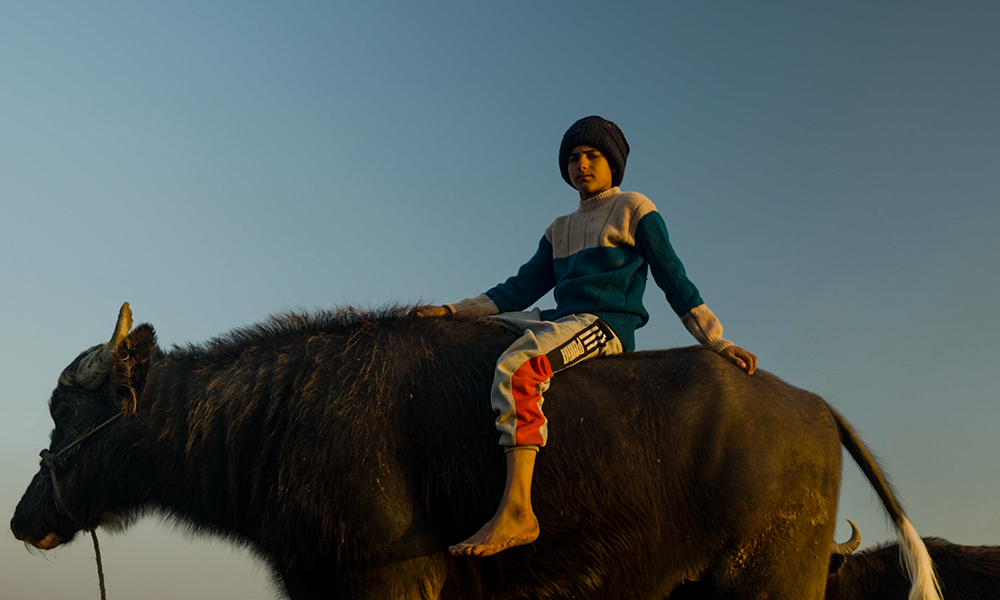
Across the region, archives are being erased, histories rewritten, and cultural memory put under pressure. AFAC’s 2026 Visual Arts program supports 29 projects that push back by reimagining, reinterpreting, and reconstructing reality through visual storytelling.
Through a wide range of art forms — music videos, audiobooks, exhibitions, photobooks and artist books, installations, photo fairs, and research and mapping — the selected projects question the harsh realities of today’s regional landscape and offer fresh counter-perspectives.
Themes explored across these projects include revisiting spaces in Tunisia and Syria; tracing vanishing professions such as shoe shining and weaving in Morocco and Palestine; and deconstructing masculinity in Sudan. Some projects dig into archives, ancient texts, art history, oral narratives, and other overlooked documentation from Palestine, Algeria, Iraq, Lebanon, and Tunisia, while others capture the shifting terrain and transformation of places, cities, and regions, whether through music tracing the southern Iraqi marshes, mapping and spatial analysis of urban development across the region, or turning soil from Lebanon’s mountains into material surface.
Over the course of the application window, AFAC received 327 applications that were shared with readers committees for a first evaluation. The committees included Nouha Ben Yebdri (Morocco), Manal Al Dowayan (Saudi Arabia), Mahmoud Khaled (Egypt), Line Ajan (Syria), Beya Othmani (Tunisia) and Joana Hadjithomas (Lebanon). The applications that passed this stage were then submitted to a committee of independent jurors.
The 29 projects were selected by 2026 Visual Arts jurors curator Nora Razian (Palestine), author and curator Camille Sarfati (Tunisia), and visual artist and independent publisher Ala Younis (Jordan). At the close of their deliberations, the jurors issued the following statement:
-
“The jury for this year's Arab Fund for Arts and Culture Visual Arts Grant would like to thank all applicants for the depth of thought and effort reflected in their submissions. There was a high number of strong applications from across the region, and we want to acknowledge the breadth and depth of artistic practice represented.
Many artists are working under precarious and difficult conditions, and this comes through clearly across the applications, in a desire to build community and create spaces of connection and collective learning despite dislocation and dire times. Applicants are grappling with what to build and what tools to use in the face of regional destruction, turning to archives, counter-archives, oral histories, as well as peer-to-peer training as ways of holding and building knowledge.
Many proposals addressed the issue of disappearance (of buildings, people, and archives) and the survival of memory through the production of books, audio works, and visual works. This is reflected, in particular, in projects focusing on the culinary, artisanal, and architectural heritage of the various countries represented. Many submissions addressed ecological issues, documenting or responding to the crises affecting the region (particularly those related to wetlands), demonstrating artists’ growing commitment to environmental causes. Few submissions, however, focused on or utilized new technologies.
We prioritized a distribution across formats and timelines, such as publications on important regional figures and movements, structural programs for local scenes (such as art residencies or training programs), artists gatherings and exhibitions supporting timely original artists projects, as well as individual and collective productions. We hope this year's grantees find the support they need to see their projects through.”
Meet the Visual Arts 2026 grantees and their projects
- Hussein Nakhal, Meetings in Timefolds, Lebanon
- Firas Shehadeh, Companions of the Cave, Palestine
- Ali Adnan Yas Al-Marai, Al-Tufan, Iraq
- Jana Traboulsi, PAPERWORK—Letters, Lines, Pages and Books, Lebanon
- Amina Kadous, White Gold, Egypt
- Aymen Al-Ameri, Baghdad Photo Week, Iraq
- Shadi Habib Allah, Feathers, Palestine
- Najla El Zein, Groundworks, Lebanon
- Ghayad Khatib, Architecture of Vanishing: Dementia as a Spatial Blueprint, Palestine
- Shereen Abedalkareem Hasanin, A Mother within these Walls, Palestine
- Manar Idriss, Referral — Reconstructing the Palestinian Visual Narrative, Palestine
- Rufaida Mohammed Mohammed Sehwail, A Spark of Light, Palestine
- Ali Asfour, Weaving the Land: Rugs as Living Archives of Palestine, Palestine
- Hicham Gardaf, Le cireur de Daguerre, Morocco
- Amina Menia, MONOGRAPHY, Algeria
- Marah Sharabati, Neoliberal Arab Urbanism, Syria
- Yesmine Ben Khelil, Revenge Song, Tunisia
- Duaa Abu Sada, A Guide to the Golan, Syria
- Mohamed Abdelkarim, Healing Sand for the Ruined Land, Egypt
- Akram Sadoon Khalaf & Albaqer Jafeer, South Symphony, Iraq
- Clara Kossaifi & Anaheed Al-Hardan, Threads of Liberation: African Asian Solidarities in the Arab World, Lebanon
- Sari Tarazi & Dina Salem, Misprints, Palestine
- Hozaifa Elsiddig Abdelrahman Abdallah, Manhood Industry Corporation (MIC), Sudan
- Turath Jamil Al-Lahoof & Emmanuelle Bertrand, Jamil Hamoudi: Artiste Total, Iraq
- Samira Bouabana , Habib Bouabana - The local-universal, Tunisia
- Palestinian Art Court-Al Hoash | Jerusalem, Re:Root, Palestine
- Kamal Boullata Foundation, Jerusalem School of Icon Painting (1740s - 1940s), Palestine
- Noor Abed & Haig Aivazian, TKHAFSH, Palestine/Lebanon
- Question of Funding + Eltiqa, Eltiqa: How to Work Together?, Palestine