

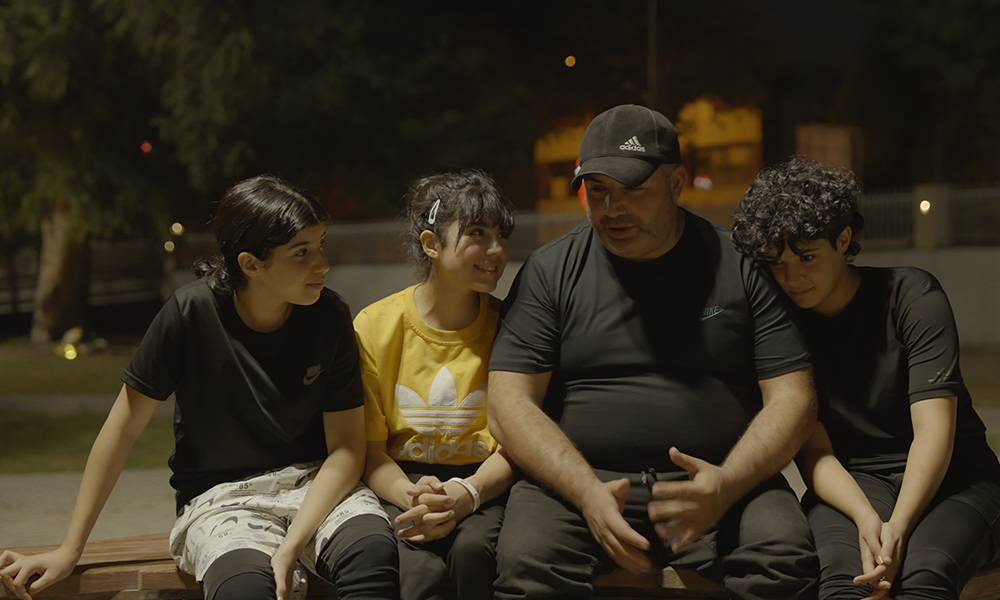
Twenty-one film projects from 10 Arab countries have received grant support under AFAC’s 2026 Documentary Film program. These films emerge from a deep need to document, preserve, and educate, casting a bold lens on the pressing issues of our time.
Whether in the silence transmitted across generations, in the fragments left behind by the August 4 explosion in Beirut, in motherly love in Saudi Arabia, or in the nightmares and memories of Baghdad’s sectarian war, the selected projects search for meaning. From Palestine, some filmmakers dig into archives, while others bear witness to the genocide in Gaza as it unfurls. Other directors explore themes such as displacement and exile across Lebanon, Palestine, Syria, and Sudan, the preservation of collective memory in Algeria and Tunisia, and journeys across generations in Syria, Egypt, Lebanon and Iraq.
Over the course of the application window, AFAC received 328 applications that were shared with readers committees for a first evaluation. The committees included Ahmed Nabil (Egypt), Randa Maroufi (Morocco), Lilia Aoudj (Egypt), Raed Andoni (Palestine), Guevara Namer (Syria) and Mohamed Said Ouma (Comoros Islands). The applications that passed this stage were then submitted to a committee of independent jurors.
This selection was reached following a two-day meeting bringing together the 2026 Documentary Film jurors: film editor and director Chaghig Arzoumanian (Lebanon); director and producer Erige Sehiri (Tunisia); and filmmaker Abbas Fahdel (Iraq). At the close of their deliberations, the jurors issued the following jury statement:
-
“The jury was deeply impressed by the richness and diversity of the projects submitted, as well as by the strong sense of urgency that permeated many of them. For most of the filmmakers, this artistic labor is not simply an act of artistic expression but a profound necessity, rooted in a deeply personal and emotional engagement with the stories they seek to tell.
The projects we encountered demonstrated remarkable courage in addressing some of the defining issues of our time: the conflicts that continue to shape the region, the climate crisis, questions of gender, and the erosion of both individual and collective memory.
We were especially moved by the prominence of women protagonists and family narratives, as well as by the emergence of compelling new voices alongside more established filmmakers. Particular consideration was given to projects from and about Palestine and Lebanon, where cinema continues to serve as a vital space for resistance, remembrance, and the preservation of collective memory.
Many of the selected projects explore the interplay between the intimate and the political, revealing how personal trajectories are profoundly shaped by war, displacement, and historical upheaval. We were equally struck by the diversity of cinematic approaches to time and storytelling. Some projects draw on archival material to excavate the memory of places, individuals, and communities; others are the result of long-term observation, allowing reality to unfold through the passage of time; while others respond directly to the urgency of the present, bearing witness to events as they occur.
In reaching our final decisions, the jury sought to support projects for which this grant could make a meaningful and immediate contribution to their development and realization. We are confident that this support will enable these filmmakers to continue work that is not only artistically compelling, but also deeply necessary and profoundly relevant to the present moment.”
Discover the 21 projects selected by the jurors
- What Remains by Tarek Turkey, Iraq | Development
- Unburied Memory by Yousef Nateel and Guillaume Vandenberghe, Palestine | Development
- Twelve Fig Leaves by Joëlle Abou Chabke, Lebanon | Development
- It is Difficult to Draw Hands by Rania El Rafei, Lebanon | Development
- Today is the End, but the End isn't Here Yet by Amine Kabbes, Algeria | Development
- The Sixth Story by Ahmed Abd, Iraq | Production
- Just Like a Dream by Corine Shawi, Lebanon | Production
- 524 Grams by Benjamin Salama, Algeria | Production
- Onions to Forget the Past by Emilien Awada, Lebanon | Production
- Ayta by Nader Bahsoun and Victoria Fiore, Lebanon | Production
- Remind Me to Forget by Lama Jamjoom, Saudi Arabia | Production
- Gorbej by Iheb Abidi, Tunisia | Production
- White Shirt by Hadeel Abu Shuqair, Jordan | Production
- Joud by Diana El Jeiroudi, Syria | Production
- To Make Things Grow by Yasmin Fedda, Palestine | Production
- Besso by Muslim Habeeb, Iraq | Production
- Within Sight and Sound by Assia Boundaoui, Algeria | Production
- Film Romancy by Bassem Yousri, Egypt | Production
- The Camera Never Cries by Elsadig Abdelgayoum and Abuzar Adam, Sudan | Post-production
- Jana by Moaz Hosni, Palestine | Post-production
- My Sister Gaza by Mohamed Rima and Ibrahim Jabaly, Palestine | Post-production