

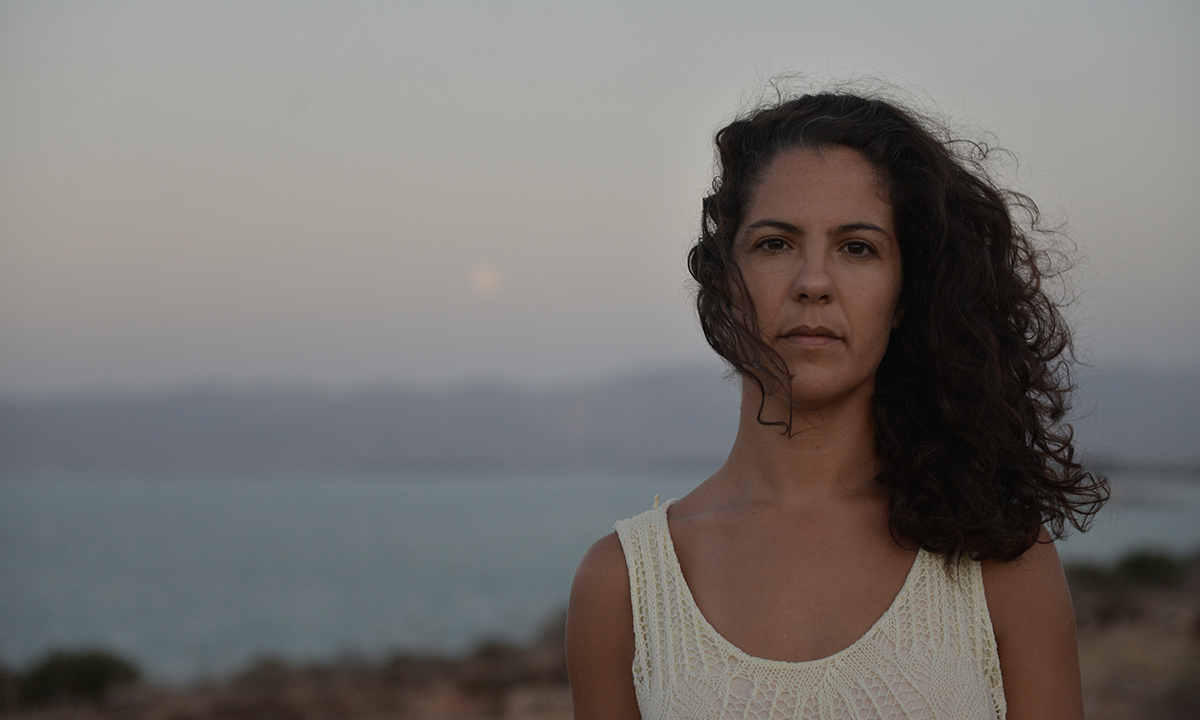
Nezha Rhondali | Choreographer & Performer, Morocco
“Art and culture are about inviting people to experience, question, and reconnect with their own bodies and realities.”
In discussion with Moroccan choreographer and performer Nezha Rhondali, she reveals how her artistic practice does not exist separately from her lived experiences. Motherhood, identity, migration, and questions of gender have all shaped the trajectory of her work, gradually leading toward one central concern; the invisible pressures imposed on bodies, particularly women’s bodies.
That concern became the foundation of Injonctions#2, the second edition of her immersive and participatory performance project exploring the social, cultural, and emotional norms that shape how people inhabit their bodies. Through installations, workshops, testimony rooms, and sensory spaces, the project invited audiences to collectively reflect on bodily pressures often internalized from childhood.
“These are messages we receive from people we love, from family and from society,” Nezha explains. “They become imposed rules that infiltrate us and sometimes make it difficult to feel like we have a choice.”
But Injonctions did not emerge only from artistic research. Nezha’s background as a legal professional deeply informed her approach. After years working in environmental law and witnessing the contradictions within supposedly “green” systems that overlooked human wellbeing, she left her legal career and spent two years traveling across Latin America, the United States, and other regions, training in dance, somatic practices, and permaculture.
“I learned to observe critically,” she says. “My artistic practice is about questioning things. The aesthetic emerges once we start to question and work with presence without being completely detached from the territory and the audience.”
Rather than positioning audiences as passive spectators, Injonctions was designed as a space of collective experience and embodied reflection.
One workshop, developed alongside a physiotherapist, explored the physical impact of bodily injunctions on women. Participants examined how social expectations shape posture and movement, how women hide their chests, curve their backs, or lower their gaze. Another workshop, led by a psychiatrist, addressed the psychological effects of these pressures, helping participants identify the injunctions shaping their lives and allowing them to consciously decide whether to accept or reject them. The response exceeded Nezha’s expectations.
Women across generations participated, alongside teenage girls and a larger-than-expected male audience. Rather than creating opposition between men and women, the project opened space for empathy and recognition.
“Men also began speaking about the pressures they experience,” Nezha recalls. “Baldness, aging, body image. These conversations became a moment of solidarity.”
At the center of the project was a careful balancing act of how to create awareness without reproducing another form of judgment. Nezha was particularly attentive to avoiding moralizing narratives around beauty standards, cosmetic procedures, or personal choices.
“We spoke a lot about avoiding turning a project about injunctions into another injunction,” she says.
At a structural level, Nezha reflects on how realizing such work remains difficult as funding constraints continue to shape the scale and accessibility of cultural projects across the region. She identifies sustainable support and audience access as two of the greatest ongoing challenges, not only in creating the work itself, but also in reaching teenagers, marginalized communities, working-class neighborhoods, and people who are often excluded from cultural spaces.
“Research is essential,” she stresses. “It is crucial to speak with sociologists, anthropologists, historians. Their insight is fundamental to avoid working in a superficial way.”
Support from AFAC helped create the conditions for Injonctions to expand beyond a limited performance format into a multi-day immersive experience involving multiple disciplines, collaborators, and audiences. More importantly, it allowed the project to evolve slowly and organically, making space for experimentation, care, and collective participation.
Today, Nazha sees Injonctions not as a finished work, but as an evolving platform that continues to grow across territories, generations, and mediums. Future plans include touring to other Moroccan cities and internationally, expanding work with teenagers and children, and developing publications, podcasts, and sound installations from the testimonies collected during the project.
In fragile cultural ecosystems, projects like Injonctions demonstrate how artistic practice can move beyond presentation into collective reflection, creating spaces where difficult conversations become possible, and where people begin to imagine themselves differently.