

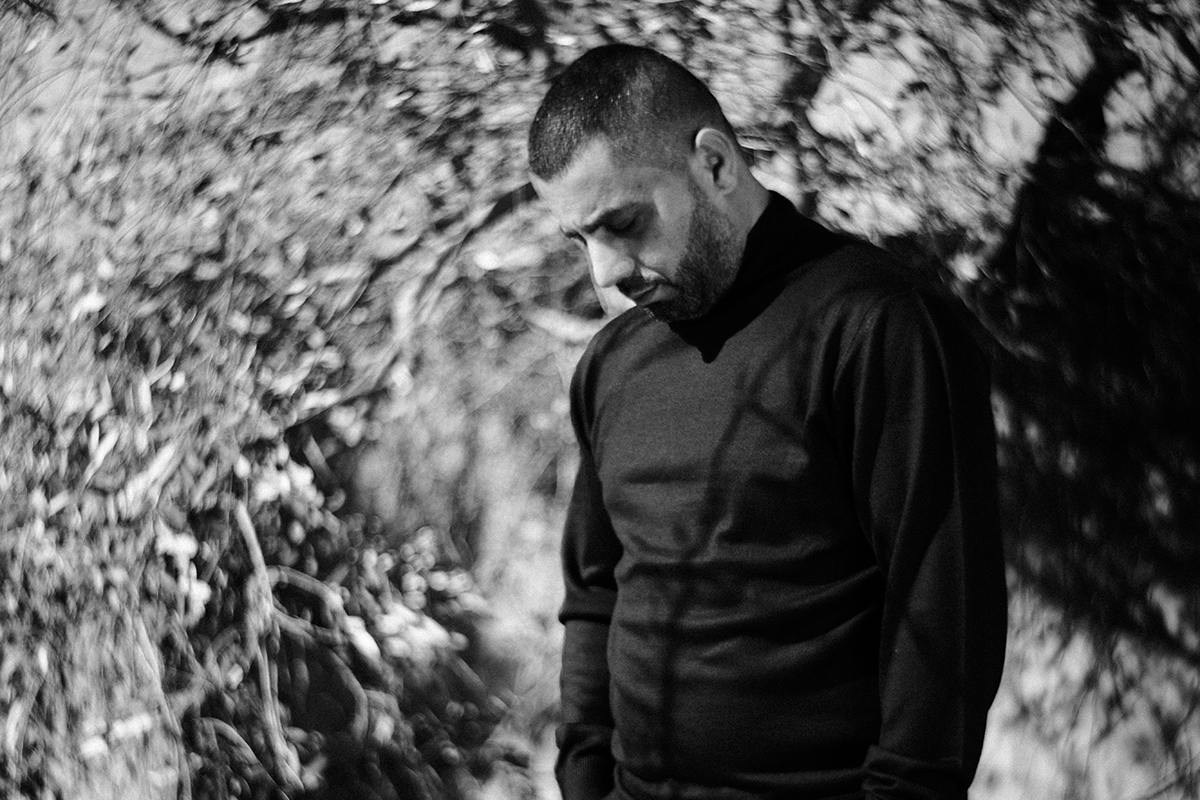
Samer Jaradat — Founder, Jafra Productions | Palestine
“Music matters to me because it creates a line of growth, where people move from expression to understanding, from ideas into practice, and from individual work into something shared.”
In Palestine, and across much of the region, creative potential is not the issue. The gap lies in the structures that support it.
For Samer Jaradat, founder of Jafra Productions, the challenge became clear through years of working closely with musicians. He recognized an imbalance between creative excellence and the absence of sustainable career structures. Artists produce compelling work without the tools, networks, or industry knowledge needed to build long-term trajectories.
“The concept of a professional career path is still not clearly defined,” he explains. “There’s strong creativity, but the systems and structures around it are still developing.”
This gap is compounded by a wider ecosystem that Jaradat describes as “complex and uneven.” Political and economic instability makes long-term planning difficult. Legal frameworks around intellectual property remain underdeveloped. Markets are fragmented, often confined within national borders that are too small to sustain a viable industry. And funding itself is frequently short-term, tied to projects rather than long-term systems.
Against this backdrop, Jaradat and his team began to rethink their approach. Rather than launching a full-scale program immediately, they started with a pilot, testing what would later become NEST, a platform designed to support the development of sustainable music careers.
That decision marked a turning point.
“We realized we needed to start smaller,” he says. “To understand the structure, test the methodology, and see how it fits the realities of the market.”
Through the AFAC-supported Arts and Culture Entrepreneurship (ACE) program, that model began to take shape. The intervention was not only financial, it was strategic. The program helped refine Jafra’s approach, encouraging a phased, iterative model rather than an immediate large-scale rollout.
“The feedback we received was extremely important,” Jaradat notes. “It helped us think more clearly about how to build something sustainable.”
Today, NEST operates as a connected system linking knowledge, practice, and industry access. It combines professional training, creative development, and long-term mentorship with a parallel focus on community-building. Musicians move through workshops, production labs, and tailored mentorship programs, while also participating in networking events, pitching sessions, and collaborations that connect them to producers, managers, and distributors. The results are tangible.
Artists who once operated informally are now structuring their work as careers, signing with booking agencies, touring internationally, securing distribution deals, and navigating legal frameworks around intellectual property. At the same time, a broader community has begun to take shape organically, with collaborations emerging independently among artists across the region.
“What matters most to me,” Jaradat says, “is seeing artists connect across the region. Beyond everything we live through, music can create a shared space where we meet differently, and that has real value for how we see ourselves and our future.”
But the impact extends beyond individual success stories.
By focusing on infrastructure - skills, networks, and systems - NEST contributes to something more structural, the gradual formation of a regional music ecosystem capable of sustaining itself. One that moves beyond isolated national markets and begins to operate at a regional scale. In this sense, the intervention addresses not only immediate needs, but long-term viability.
AFAC’s role, Jaradat reflects, has been part of the journey well before NEST formally existed. Continuous engagement, feedback, and support helped build confidence in the process, allowing the initiative to evolve organically rather than under pressure to scale prematurely.
“AFAC has accompanied us since before the initiative was born,” he says. “That gave us the confidence to continue.”
In a region where artistic production often outpaces structural support, initiatives like NEST point to a different model, one where creativity is matched with the systems needed to sustain it.
And for those who choose to support that work, the impact is not abstract. It is visible in careers built, communities formed, and an industry slowly taking shape where none fully existed before.