

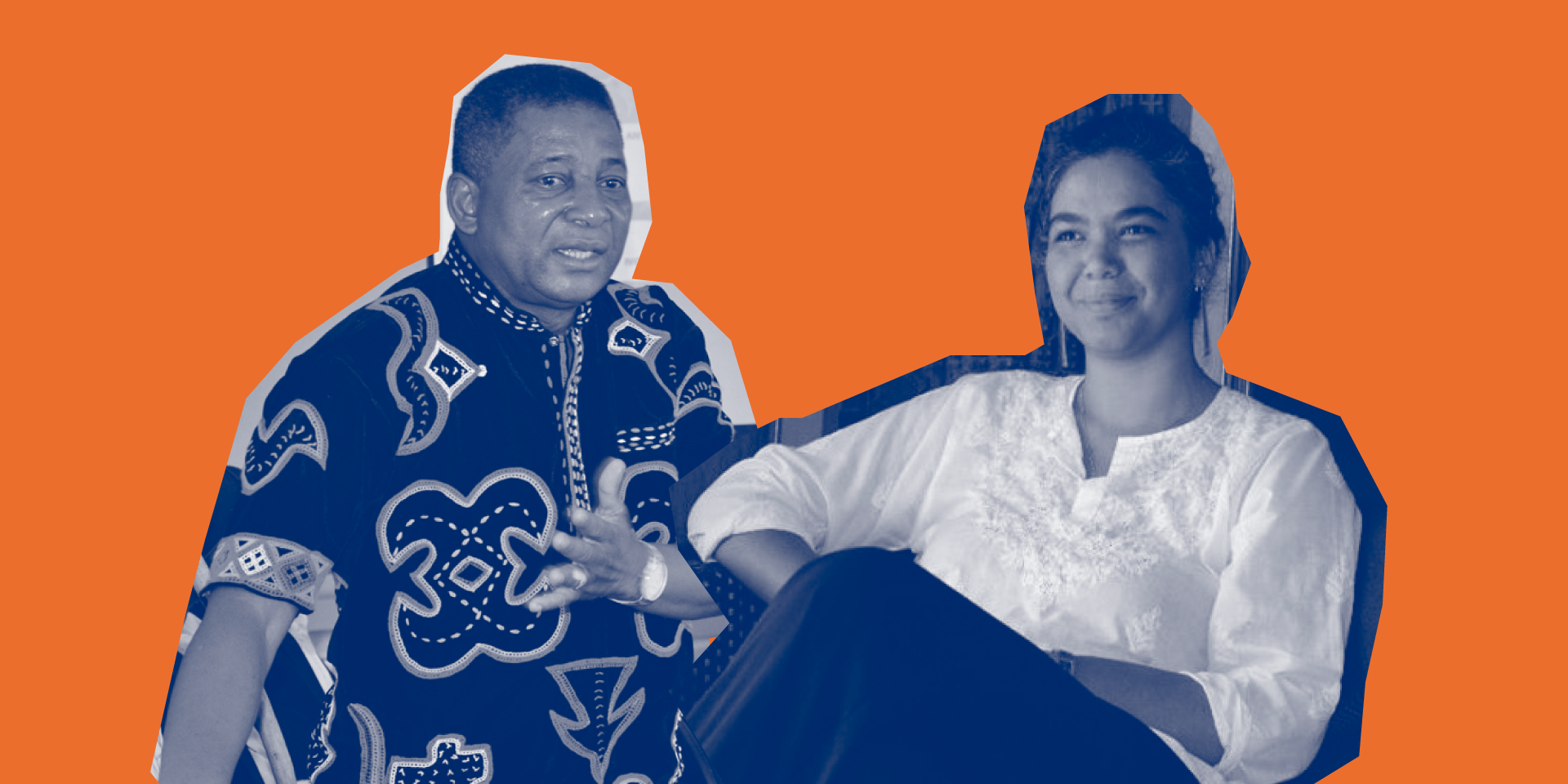
Founders of VITA, Morocco & Cameroon
“A living archive creates the conditions for knowledge to keep moving”
Across Africa, musical instruments carry more than sound. The knowledge of how they are made and played, the communities around them, and the histories they embody form part of a living cultural memory. Yet some of that knowledge risks disappearing with the people who hold it.
“A critical challenge in the Arab world is the rapid erasure and marginalization of living heritage and collective memory,” says Ghita Khaldi, Project Director and Founder of VITA – L'Instrumenthèque d'Afrique. Traditional knowledge and musical practices, she argues, risk “disappearing or being reduced to folklore,” depriving younger generations of cultural roots and historical continuity.
This concern sits at the heart of VITA, a cross-border initiative led by Afrikayna in Morocco in partnership with Association SANDJA in Cameroon, supported through AFAC’s North Africa Cultural Program (NACP).
VITA is building a living collection and archive of traditional African musical instruments through research, field documentation, exhibitions and digital access. But its purpose goes beyond preserving instruments: it asks how the knowledge around them can continue to be transmitted.
For Michel Ndoh Ndoh, an organology researcher based in Cameroon, this means “documenting and passing on cultural heritage, promoting local cultural expressions, utilising digital tools and creating spaces for dialogue between generations and communities.”
One encounter brought this idea to life for Ghita.
During a visit to Mali, Moroccan Gnaoua maâlems sat in a circle with Malian musicians, playing their guembris and ngonis. Despite speaking different languages and living across geographical borders, their rhythms quickly came together.
“In the room, the divide between North and Sub-Saharan Africa completely dissolved into shared history and collective emotion,” Ghita recalls. “It confirmed that our role as cultural operators is simply to build the bridges that allow those long-overdue reunions to happen.”
That exchange reflects the kind of African cooperation VITA hopes to foster. Michel describes the partnership between SANDJA and AFRIKAYNA as bringing together “expertise in heritage, research, exhibitions, knowledge transfer and network development.”
With NACP’s support, the project moved from concept to a physical and digital resource. Its living collection now includes more than 70 traditional instruments, with exhibitions held in Morocco and Cameroon. VITA also launched instrumentheque.com, an open-access digital archive bringing together technical information, photography, sound recordings and audiovisual field documentation.
Field research has taken the team directly into traditional instrument makers’ workshops in Morocco and Cameroon, producing more than 20 instructional videos documenting endangered oral knowledge and craft techniques.
For Ghita, engaging younger creators alongside traditional masters ensures that heritage is “not a static relic of the past, but an active, emancipatory toolkit for social cohesion and critical thought today.”
That question of transmission followed Ghita and Michel to Beirut during an August 2026 NACP gathering, where they visited oud maker Albert Mansour. Asked whether younger generations would continue learning the painstaking craft of making and repairing instruments, Albert was confident that interested young people would always exist if given opportunities to learn.
“As long as humans breathe, instruments will survive.”
VITA suggests that their survival depends on more than preserving the instruments themselves. It depends on whether someone still knows how to make them, play them, reinterpret them and pass that knowledge forward.
A living archive preserves more than objects. It creates the conditions for knowledge to keep moving, from one person, place and generation to another.