

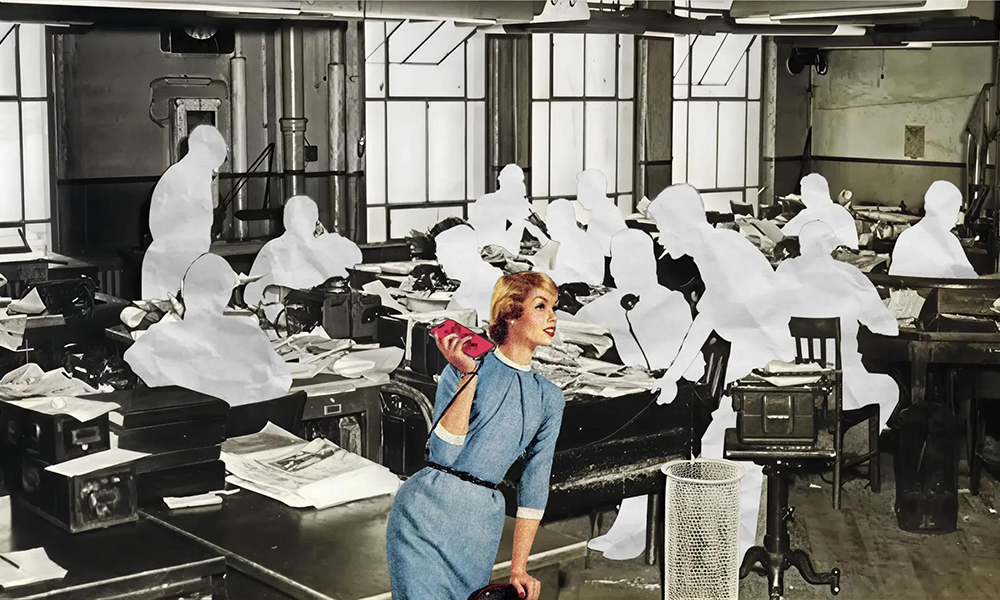
Fifteen projects have received grant support under the Ecologies of Culture program’s Creative Caravans | Digital Media Platforms pillar.
The media determines not only how to tell a story, but what becomes a story in the first place. Media platforms shape how meaning moves: framing narratives, filtering voices and determining what reaches whom. They do not simply relay the story. They create the conditions for engagement, and at their best, they can open space for knowledge and perspectives that have long remained at the margins.
Creative Caravans facilitates the circulation of ideas and artistic works beyond borders, languages and cultures. By supporting independent digital media platforms in the region, the program enables the creation and dissemination of creative content, independent storytelling and ideas that address global and local challenges through digital dissemination and multimedia production.
The selected projects address topics like cultural journalism and feminist storytelling in Jordan, gender equality and the impacts of environmental and climate crises in North Africa, from the water scarcity in Morocco to the preservation of Tunisia's forests, mythology and the metaphysical, critical approach to society, politics and culture in Syria, and the documentation of social and professional transformations across creative sectors in Egypt and Lebanon. Adopting a variety of formats — artistic videos, podcasts, web documentaries, articles, and visual stories — these platforms deconstruct realities and nurture alternative narratives.
The jury committee comprised journalist, cofounder and editor-in-chief of Mada Masr Lina Attalah (Egypt), director and founder of the Tunisian online media outlet Rachma and former editor-in-chief of Nawaat Thameur Mekki (Tunisia), and executive editor of 7iber.com Lina Ejeilat (Jordan). The committee convened to review the submissions and make their final selection. At the close of their deliberations, the jurors issued the following statement:
-
“As practitioners in this field for nearly two decades, we found the experience of evaluating projects submitted to the digital media platforms sub-pillar very enriching. It provided us an opportunity to engage more deeply with the media landscape and its current concerns, shedding light on its overlooked aspects. It also offered a window into the richness and diversity of the independent Arab media landscape — both in terms of the platforms themselves, from emerging initiatives to more established and experienced ones, and in terms of the forms of production and publishing and the nature of the ideas they address in their various engagements with current global issues.
Although the applications were diverse in terms of their editorial lines, the submissions we reviewed revealed a striking convergence in the issues they addressed. The question of the environment, particularly in its political, regional, and human dimensions across the Maghreb, emerged as one of the central themes. We also saw an urgent need to create spaces for lively critical debate and produce intellectual work that contributes to deepening cultural critique and unpacking the transformations currently taking place across the region.
Throughout the evaluation process, we sought to consider how closely the projects were rooted in their diverse local contexts, while also taking into account the differing scopes of the projects — from those with a regional dimension that extends beyond borders to others with a more focused local impact. We also sought to maintain a balance across forms of production, without being swayed by innovative presentation. While it was important to support engaging and creative multimedia forms, we felt it was equally important to support projects that celebrate and invest in high-quality long-form writing.
This balance also extended to geography. We sought to ensure geographic diversity without falling into the trap of token representation or quota-based selection. In this regard, we noted a particularly high number of applications from certain countries, including Syria and Lebanon.
Finally, we looked for originality in the ways institutions engage with the local and regional implications of global issues, avoiding approaches that were overly direct or superficial.
We would like to conclude by expressing our thanks and appreciation to all the institutions, and, especially the people behind them, who shared their visions and aspirations with us through their applications. The selection process was by no means easy; the fact that some outstanding projects were not selected for support should in no way be understood as a judgment on their efforts or the quality of their work. Rather, it was a natural consequence of the limited number of grants available and the need to balance the multiple criteria and considerations we outlined above.
We are fully aware that the political and social contexts in which media and cultural work takes place in our region are becoming increasingly complex and difficult. In light of these contexts, we hope these grants will provide meaningful momentum for the continued development of this free intellectual and media movement, and strengthen its active contribution to shaping the future of Arab culture.”
Meet the selected digital media platforms
- La Mémoire de la Forêt by QLM Media, Tunisia
- AlHudood Original Productions by AlHudood Network, Jordan
- Water vs Life by Lima Arabia, Morocco
- Under Pressure: Transformations of Creative Professions in Egypt and Lebanon During 20 Years of Crises and Digital Transformations by Line 30, Lebanon
- Whiteboard by Project 0, Lebanon
- 3 balata by 3 balata, Syria
- Miftah Media Platform: Developing Visual Storytelling Production on Palestinian Refugees in Syria by Miftah Media, Syria
- Atabat by Ma3azef, Jordan
- Al Rawiya Issue X by Al Rawiya, Lebanon
- "Africa Voices" - Storytelling on climate change and gender equality in African Arab countries by Africa Voices, Egypt
- Nasrud (We Narrate): Advancing Feminist Storytelling through Visual and Digital Media by Takatoat, Jordan
- Stories That Stay by Silat Wassel, Lebanon
- On the Edge of Platforms-A multi-platform cultural journalism project exploring content creators and digital culture in Palestine and the Arab world by Bookchoco Digital Platform, Palestine
- El Maraya TV by El-Maraya For Culture and Arts, Egypt
- Harmony: A Journey into the Concept of Harmony by Ecologia, Tunisia
Ecologies of Culture is led by AFAC, in partnership with Oxfam, Megaphone, and Echos Electrik, and co-funded by the European Union.