

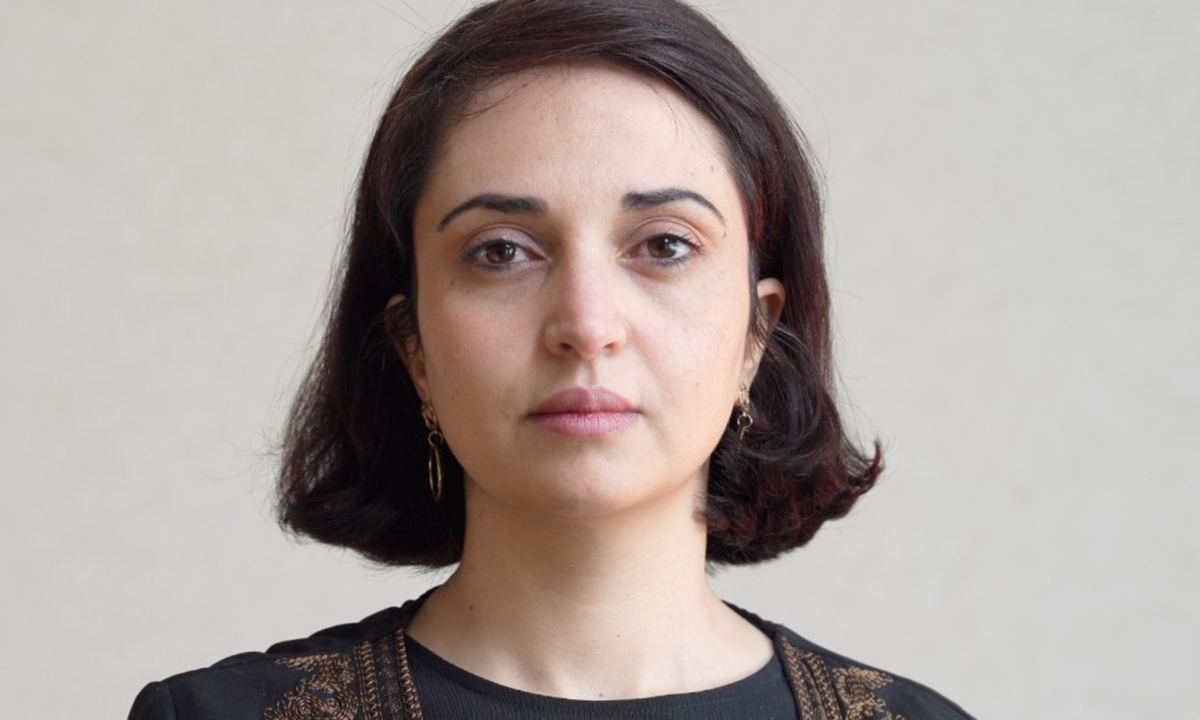
Founder, Yemeni Women Archive, Yemen
“Arts and culture matter to me because they're part of our everyday living. It's about who gets seen and heard.”
Poet-scholar and educator Saba Hamzah sees archives as more than repositories of the past. They shape who is remembered, whose knowledge survives, and ultimately whose histories become part of the future. That belief became the foundation of the Yemeni Women Archive, a growing space dedicated to documenting and preserving the stories, knowledges, and lived experiences of Yemeni women across Yemen and its diaspora.
"Through the Yemeni Women Archive," Saba explains, "it's been about making sure silenced stories speak for themselves."
For her, one of the most urgent challenges facing arts and culture in the Arab world lies not only in limited funding, but in where that funding comes from.
"So much of the funding and infrastructure for arts and culture in the Arab world still comes from outside the region," she reflects. "That shapes not just what gets made, but whose stories get told and how."
Rather than accepting those limitations, Saba believes artists and cultural practitioners have an opportunity, and a responsibility, to build independent, community-rooted institutions that preserve everyday histories.
"Archives, collectives, and cultural spaces make room for voices and stories of everyday life," she says. "Especially those on the margins, who are actually the majority."
Unlike many projects that begin with a single defining breakthrough, the Yemeni Women Archive has grown through a series of quiet affirmations. When asked if there is a moment during this project that has stayed with her, Saba says, "It's less a single moment and more a continuous one. Again and again, different women and men, older and younger, have told me they believe this project matters. It moves me, every time."
Those conversations remain among the project's most meaningful milestones. Women who have dedicated decades to documenting women's histories, alongside younger generations, have entrusted the archive with something larger than encouragement.
"It feels like being handed a thread that connects the Yemeni Women Archive to decades of work that came before it," she reflects, "and with it, a responsibility to carry that thread forward."
That sense of responsibility shaped the archive's next chapter.
After first receiving a capacity-building grant, through AFAC’s The Cultural Atelier in Yemen program, the team strengthened its internal practices and structure before launching Manwar (منور), an initiative within the broader Yemeni Women Encyclopedia dedicated to documenting the lives and contributions of Yemeni women.
Through Manwar, ten researchers and writers were trained to investigate the stories and legacies of twenty women whose contributions would likely have remained absent from official histories and public memory.
For Saba, this work is about much more than documentation.
"It reflects what the Yemeni Women Archive is built to do," she explains. "Create knowledge by and about Yemeni women, ensuring their contributions are recorded, remembered, and made accessible for generations to come."
She also reflects on what it took to build the organisation itself.
"The support we got from AFAC gave us a real safe space to learn and grow," she says. "To experiment, make mistakes, and develop as practitioners in a field that doesn't offer many spaces like that for women."
Equally important, the support allowed the team to grow alongside the project. "It gave us room to build a team and understand what this kind of work actually demands," she says.
Support also strengthened the archive's ability to collaborate across the sector. "Being a recognized, supported initiative made it easier to be in conversation with other organizations in the field."
Today, the Yemeni Women Archive continues to expand, not only as an archive, but as a living ecosystem of researchers, writers, educators, and communities committed to preserving women's histories on their own terms.
In places where official histories often overlook women's experiences, initiatives like the Yemeni Women Archive demonstrate that preserving memory is not simply about recording the past. It is about creating the conditions for future generations to inherit a fuller, more inclusive history, one built by the very people whose voices have too often been left out.