

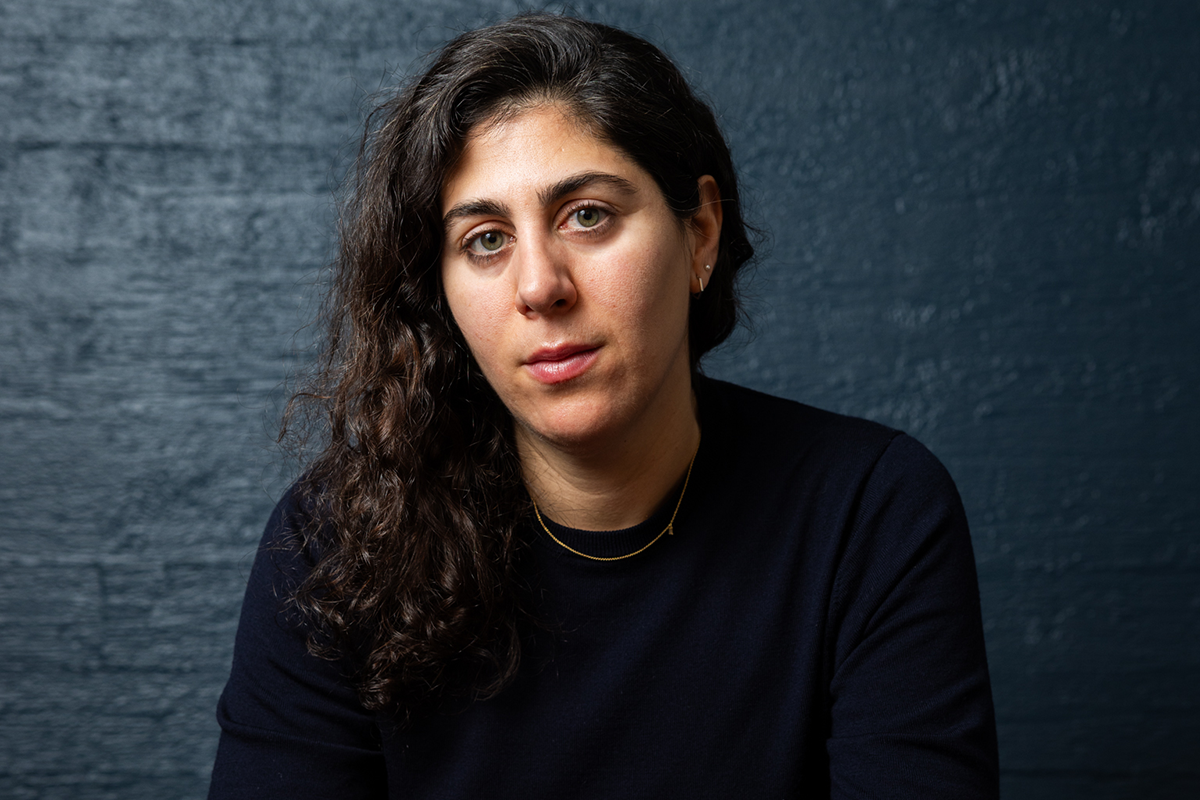
Lana Daher | Filmmaker and Director, Lebanon
“Arts and culture matter to me because they are a reflection of how a society sees itself.”
In Lebanon, there is no organized national audiovisual archive. Decades of films, television, home videos, and recordings exist scattered across private collections, fading hard drives, and fragile memory.
At the same time, narratives from the Arab region face growing pressure to simplify, become legible to external institutions, and fit diverse identities into fixed frames. The complexity of the lived experiences in the Arab world is often flattened into something easier to fund, circulate, or categorize.
For Lebanese filmmaker Lana Daher, this tension became the starting point of her documentary Do You Love Me — a film built entirely from archival footage that traces Lebanon’s collective memory through cinema, songs, television, and personal recordings.
But the project did not begin as an exploration of memory.
Lana describes what started as a contained portrait of the Bendaly family and the relationship between music and war. Somewhere in the development process, the film shifted. What Lana thought would remain centered on a family narrative gradually unfolded into something much more intimate.
“It stopped being about them,” she says. “It became about my own lived experience in Lebanon. My childhood, my relationship to violence, memory, and identity.”
The turning point was not a single dramatic event but a slow realization; the archive was not simply historical material, it was a mirror. Through fragments of Lebanese cinema, songs, home videos, journalistic recordings and photography, Lana began excavating her own emotional history. Collective memory became the vessel for personal storytelling.
At that stage in production, her project required something that is rarely a given in fragile cultural ecosystems: time.
AFAC’s support arrived when financial pressure could have forced the film into premature completion. Lana describes, “It allowed me to sit with the material, experiment, and shape the narrative in a much more thoughtful way instead of rushing through the process under financial pressure.”
“And being selected by AFAC — a respected and competitive regional grant — sent a signal that the project was serious and meaningful.”
That signal mattered. Not only financially, but politically.
“Receiving support from an Arab organization made a profound difference,” Lana says. “It affirmed that the story mattered within its own cultural context — not only to foreign institutions.”
The outcome is Do You Love Me, a playful yet personal journey through 70 years of Lebanon’s audiovisual memory. In a country without a central national archive, the film becomes both preservation and reconstruction, celebrating creative expression as resistance, renewal, and a way to hold memory against erasure. But the impact extends beyond a single film.
Lana explains, “As artists, representation carries responsibility. Our response has to be courage and integrity. We have to insist on complexity and telling layered stories. That means protecting creative independence and spaces where difficult conversations can happen safely. Art cannot solve political realities, but it can resist erasure. And that resistance is essential.”
In a landscape where artists face political, economic, and institutional pressures, sustained regional support creates breathing room. It allows their stories to exist. It allows archives to be activated. It allows cultural memory to endure.
And for those who choose to support this ecosystem, that intervention is not abstract. It becomes time granted, risks absorbed, and stories preserved with integrity. It creates the conditions in which artists can shape their own narratives, on their own terms, within their own region.
*Lana Daher | Filmmaker and Director, Lebanon