

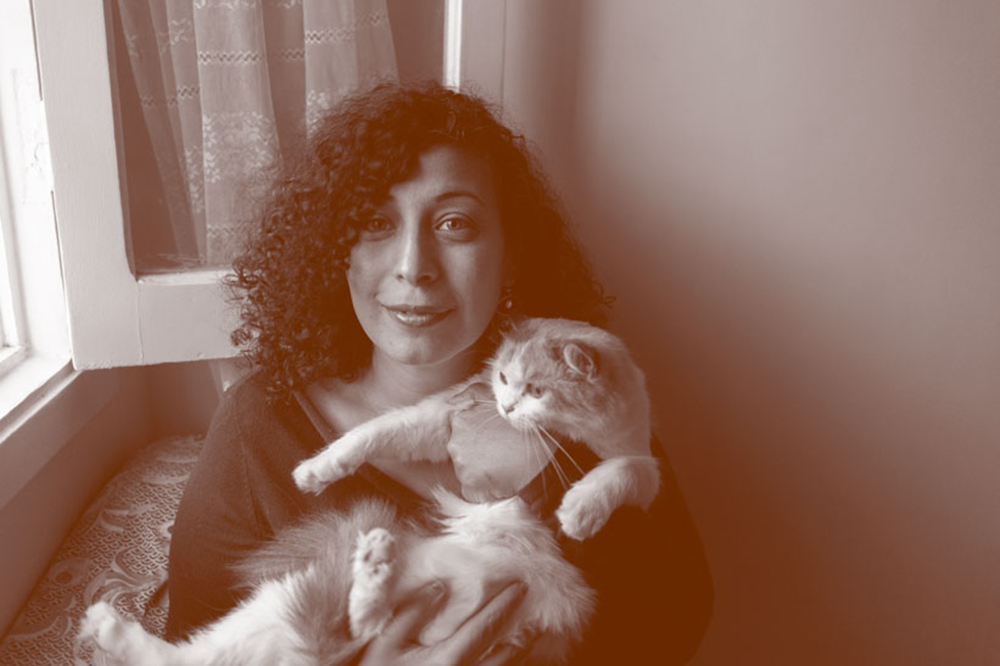
Heba Khalifa — Visual Artist & Documentary Photographer
“Arts and culture matter to me because they are the path through which I come to know myself and the world”
For Heba Khalifa, art is not an add-on to life, it is a passage through life. A way out of confinement, and a way inward at the same time. Through art and culture, she says, she discovered the vastness and diversity of the world beyond the narrow space she once inhabited. And through the same passage, she learned how to descend into herself, discovering depths she didn’t know existed.
“Art is my way of making an intimate connection with myself and with the outside world,” she reflects. “It’s like a tree that grows inside me and around me—healing my body, my heart, my spirit—and carrying healing to others too.”
This deeply personal understanding of art sits within a much harsher reality. Like many artists she knows, Heba describes herself as living on the margins of society, where the role of artists as active agents is constantly restricted and disciplined. Expression is surveilled, contained, and, at times, violently punished.
“You can’t always say what you want,” she says. “Sometimes the cost is prison, or even incitement to murder. Naguib Mahfouz is one example.”
As a result, artists move carefully, avoiding, bypassing, or ignoring the many radars surrounding them, just to create work they believe in. For Heba, survival and integrity go hand in hand.
In response, she believes the most urgent act is connection. Artists, across disciplines and fields, need to build networks with one another and keep an open, living dialogue about why art matters, how it’s made, how it circulates, and how it is seen. A dialogue that asks how artists can support one another rather than compete.
“The race has exhausted all of us,” she says. “Artists are isolated, depressed, or angry—and they have every right to be. Too often, conversations about art turn into fights that leave us even more lost.”
This tension—between urgency and care, truth and survival—came sharply into focus during the development of her AFAC-supported project, Tiger’s Eye.
While working on the book, Heba recalls a moment that continues to echo. She was cutting out a photograph of herself as a child, removing the image from the frame it had been trapped in for years. She felt joy, celebrating the child’s freedom. Then a voice rose inside her: What is this lie? Are you using art to rewrite the story and talk about freedom? We were drowning.
In response, she submerged the photograph in a jar of water and photographed it again. Then she put the camera down—and had a nervous breakdown.
Only afterward did clarity arrive. She realized she wasn’t working with images or objects at all, but with living voices inside her, voices carrying stories that demanded to be told.
That realization sits at the heart of Tiger’s Eye, an experimental visual book rooted in personal research and the long, fragile process of self-healing. Set in Cairo, the project confronts childhood trauma, physical and sexual abuse within the family, and the silence surrounding it—particularly within mother–daughter relationships. It directly challenges taboos tied to gender, motherhood, and religion, exposing how shame, blame, and silence operate inside the domestic sphere.
Drawing from a personal archive of photographs, writings, drawings, and collages, Heba reconstructs memory rather than explains it. Image and text coexist without resolving one another, creating a sensory experience that mirrors the fragmentation of trauma and recovery. In Tiger’s Eye, photography becomes both witness and method—a way to reclaim the gaze as an act of resistance and self-possession.
Support for the project, Heba says, was foundational. It gave her something rare and essential: time. Time to think, to dive deeply, and to make the work as it needed to be made. It also allowed her to care for herself during the process, including dedicating part of the budget to therapy—a process she says she could never have done on her own.
“Starting the project with the support of AFAC and the Magnum Foundation changed everything,” Heba recalls. “It gave the work legitimacy and visibility, and helped me imagine the book as something that could speak to the world, beyond Egypt.”
From where she stands today, Heba sees the future of arts and culture in the Arab world as inseparable from collective care, honesty, and sustained support. Without spaces that allow artists to work slowly, truthfully, and safely, the cost is not only cultural—it is deeply human.