

Tizintizwa Collective
Morocco
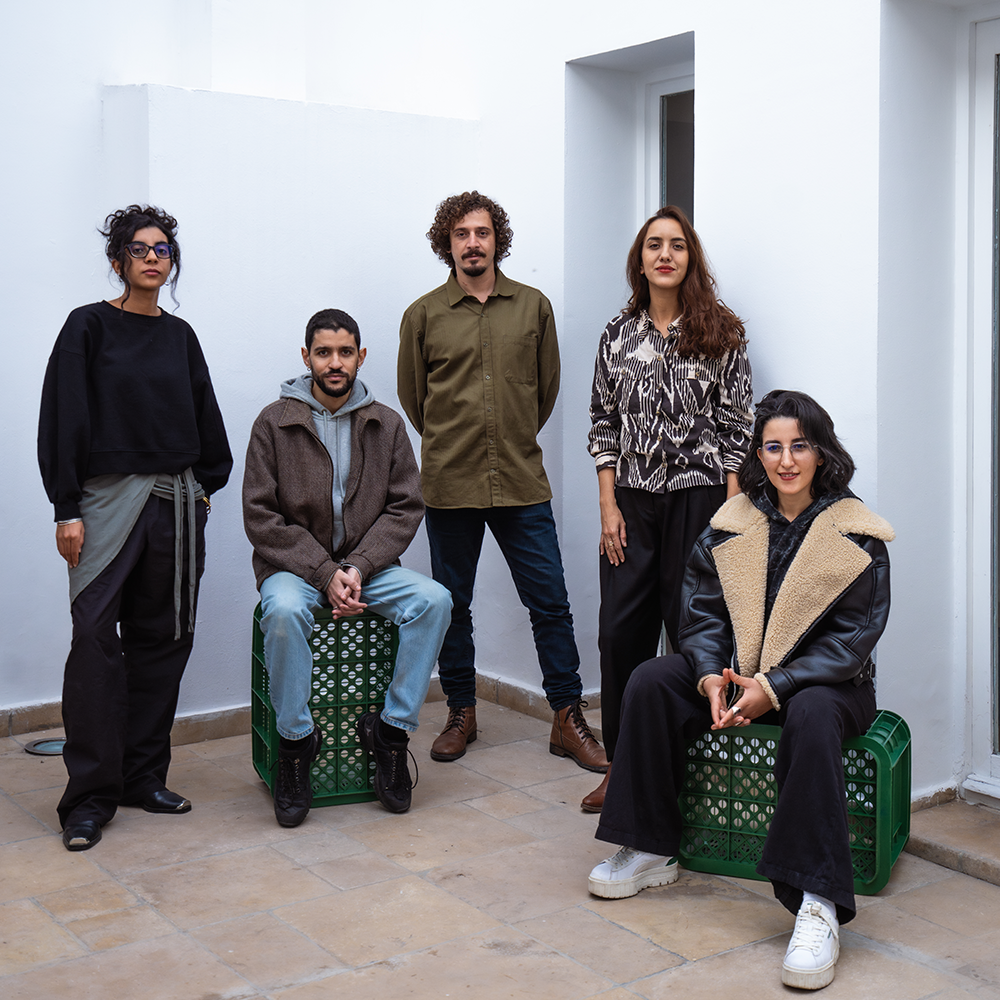
Tizintizwa (formerly known as AWAL) is a poly-disciplinary art-research collective which acts as a set of pretexts for collective reflection, creation and cross-pollination. Their practice is based on working together and with others, finding consonance in difference and championing heterogeneity in nature and culture. Carried by their research into ancestral modes of communitarian artistic creation, horizontal governance and "cinema from below," their work's focus tends to include orality, collective memory, popular history, land struggles and urban planning. Founded on shared critiques of imperialism and nation-states as forces of "monoculturalization," the collective's work often revolves around collaborative processes, initiating cross-regional or south-south dialogues, trans-generational transmission and relations between land and people. Their work includes Teide (2025), an immersive video piece revising the colonial history of the Americas and Canary Islands from an indigenous (Amazigh) perspective, Against Monoculture (2023), a publication series discussing the relationship between art and agriculture, Assays (2023), an installation exploring ancestral forms of horizontal governance, Amussu (2019), a community-produced film, Quetzalcoatl's Visit to Jbel Azurki (Or How Maize Came to Be Grown in the Atlas), a semi-fictional short story connecting Africa and the Americas through food history and Remedies for Monotony, a photo essay delving into the infrapolitics of agricultural workers. Tizintizwa’s work also includes curatorial art-research projects like Awal Anddam, a public program and residency dedicated to encouraging the documentation and reactivation of Northwest African oral traditions. Their work (before and after they re-named themselves Tizintizwa in 2023) has been shown at various venues including the 35th São Paulo Biennial, the Centre Pompidou-Metz, the Museu da Republica (Brasilia), documenta 15 and IDFA.